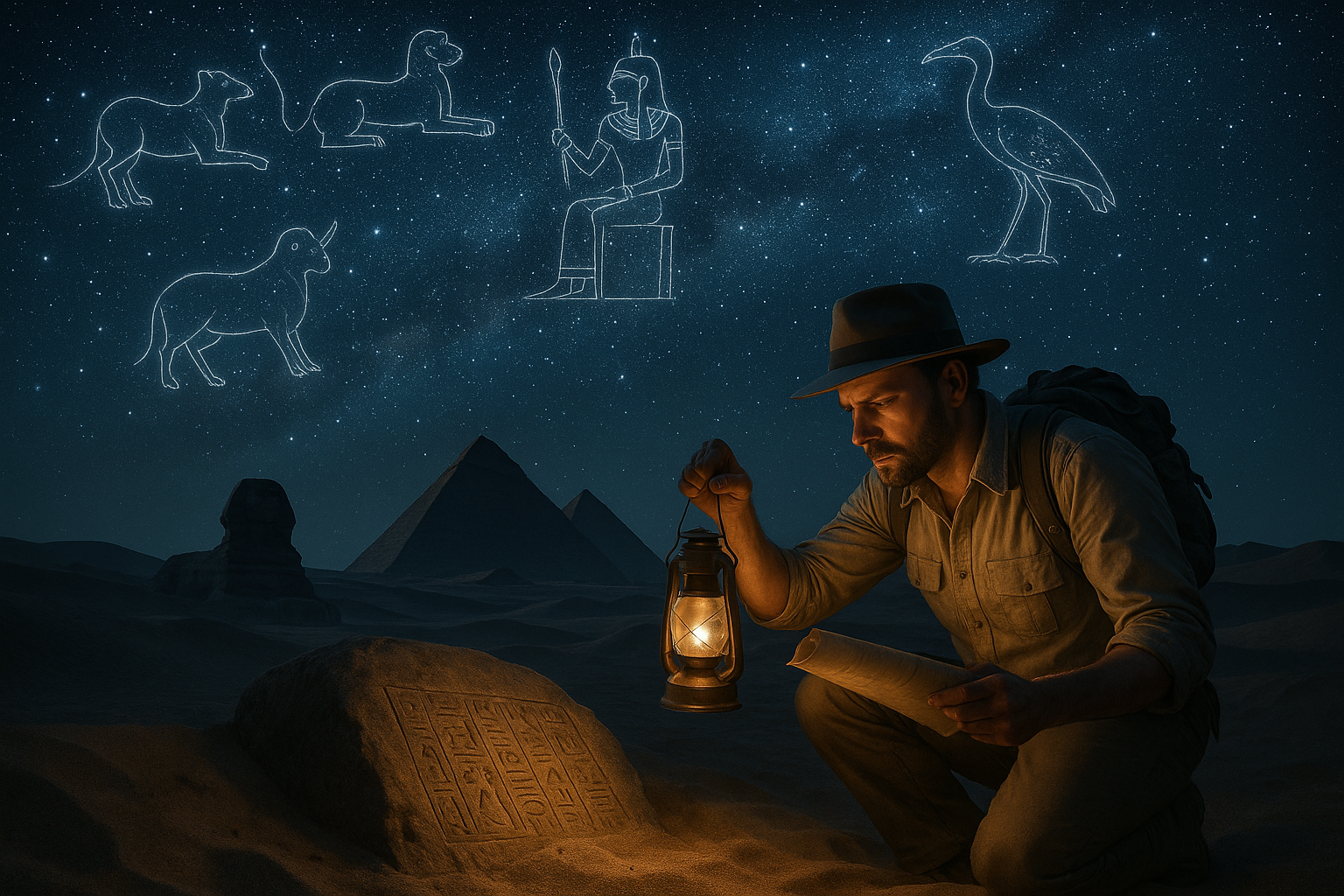
For centuries, humans have gazed up at the night sky, their imaginations ignited by the shimmering tapestry of stars. This celestial wonder has not only inspired countless myths and legends but has also served as a cosmic map, guiding sailors across vast oceans and helping farmers sow their crops in harmony with nature. However, among the most intriguing uses of this stellar roadmap is its role in ancient mystery religions, where astrology was more than a tool—it was a gateway to the divine. 🌌

The practice of astrological divination is woven into the very fabric of ancient spiritual traditions. These mystery religions, shrouded in secrecy and mystical allure, were the crucibles where astrology was transformed from a simple observation of the heavens into a profound spiritual science. But how exactly did astrology shape these enigmatic faiths? What cosmic secrets did the ancients unlock through their celestial rites and rituals? And how did these practices influence the evolution of religious thought throughout history?
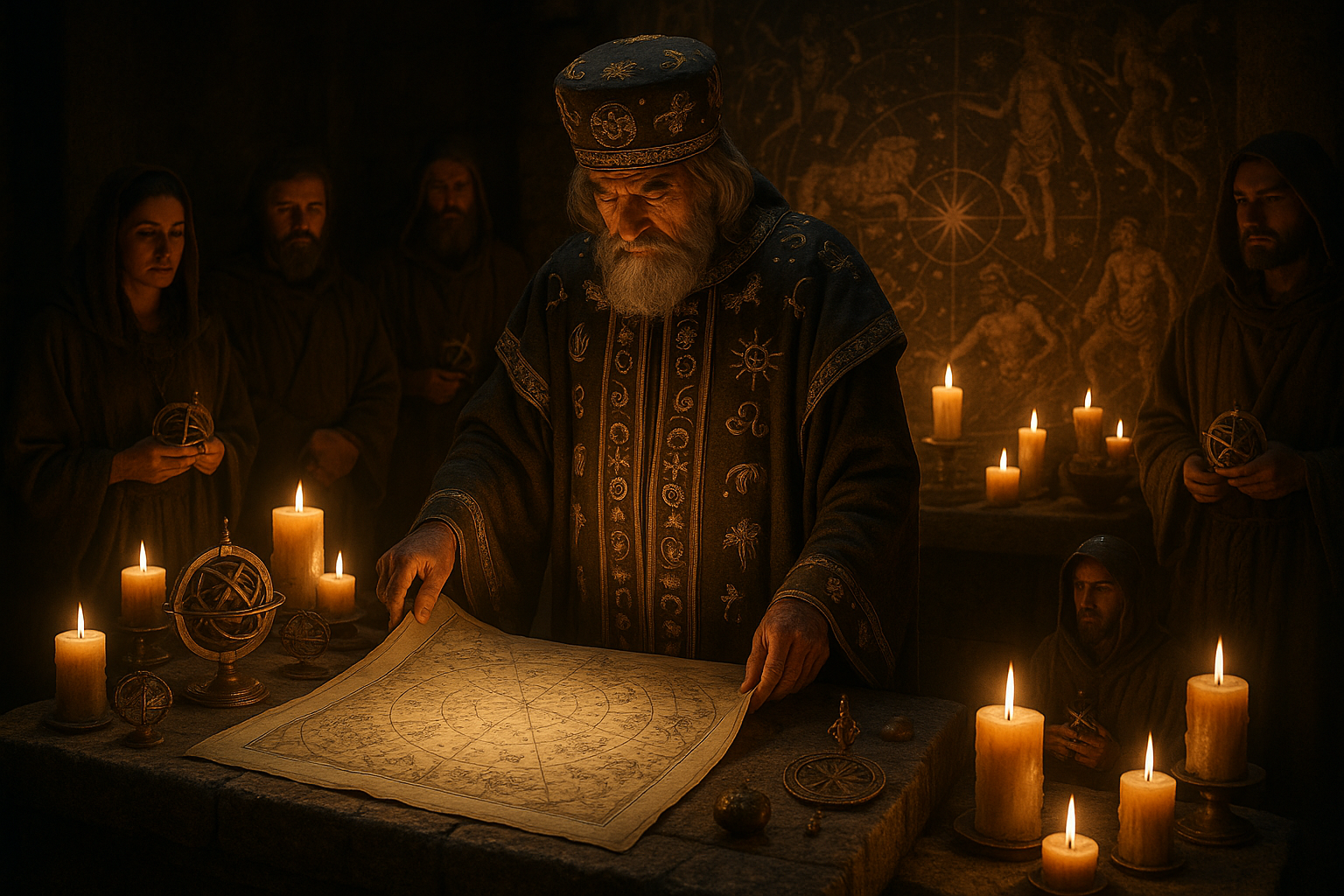
In this exploration, we will delve deep into the heart of ancient astrological practices, peeling back the layers of time to uncover the secrets of the cosmos as understood by our ancestors. We will embark on a journey through the hallowed halls of mystery schools, where initiates sought enlightenment through the study of the stars. Along the way, we’ll discover how these celestial beliefs were intricately linked to the doctrines and ceremonies of powerful ancient religions such as the Eleusinian Mysteries, the cult of Mithras, and the worship of Isis.
Each of these religions, unique in their rituals and teachings, shared a common thread: the belief that the cosmos was alive with divine intelligence, and that the stars and planets held the keys to unlocking the mysteries of existence. Astrology was not merely a means of predicting mundane events; it was a sacred science, an esoteric discipline that provided insights into the soul’s journey and its ultimate reunion with the divine.
We will begin by exploring the origins of astrology in ancient Mesopotamia and its subsequent evolution in the classical world. This foundational knowledge will set the stage for our examination of how astrology permeated the teachings of mystery religions. As we journey through these ancient lands, we will uncover the profound connections between celestial phenomena and religious symbolism, illustrating how the ancients perceived the universe as a mirror of the spiritual realm.
Next, we’ll delve into specific examples of astrological divination within these mystery traditions. The Eleusinian Mysteries, for instance, were renowned for their elaborate initiations, which symbolically mirrored the cycle of death and rebirth—a theme echoed in the movement of celestial bodies. Similarly, the Mithraic Mysteries, with their intricate astrological symbolism, reveal a sophisticated understanding of the cosmos as a source of spiritual power and guidance. 🌠
In addition, we’ll examine the role of the zodiac and its twelve signs in shaping religious iconography and mythology. From the lion-headed deities of Mithraism to the Virgin Mary’s association with Virgo, the impact of astrological imagery is both profound and far-reaching. These symbols not only offered a language through which the divine could be understood but also served as a bridge between the earthly and the celestial.
Finally, we will consider the legacy of astrological divination in the context of modern spirituality. While the mystery religions of antiquity have faded into the annals of history, their influence persists. Astrology continues to captivate the human imagination, offering insights into personality, destiny, and the greater cosmic order. By revisiting these ancient traditions, we can gain a deeper appreciation for the enduring power of the stars to inspire, guide, and transform the human spirit. ✨
So, as we embark on this cosmic odyssey, let us open our minds to the ancient wisdom encoded in the heavens. Through the lens of astrology, we will uncover the timeless truths that continue to illuminate the path to spiritual awakening. Prepare to be enchanted by the celestial symphony that has harmonized the mysteries of religion and the cosmos since time immemorial.
Conclusion
## Embracing the Wisdom of the Stars
The ancient practice of astrology continues to captivate modern minds because it speaks to something fundamental within us—the desire to understand our place in the cosmos and find meaning in the patterns that surround us. What began thousands of years ago as observations of celestial movements has evolved into a rich tapestry of knowledge that bridges cultures, eras, and belief systems. Whether you approach astrology as a spiritual guide, a psychological tool, or simply a fascinating historical subject, there’s no denying the profound impact it has had on human civilization. From the Babylonians who first mapped the zodiac to the Hellenistic scholars who refined its interpretations, each generation has added layers of depth and understanding to this cosmic language.
Today’s renewed interest in astrology isn’t just about daily horoscopes or personality traits—it’s about reconnecting with ancient wisdom that encouraged people to look beyond themselves and consider their relationship with the universe. The symbolic language of planets, houses, and aspects offers a framework for self-reflection and personal growth that resonates with our modern quest for meaning. By studying the cosmic secrets that our ancestors left behind, we gain not only insight into their worldview but also tools that remain surprisingly relevant for navigating contemporary life’s challenges and opportunities.
As you continue your own journey into the mysteries of ancient astrology, remember that this knowledge was never meant to predict a fixed future or limit your potential. Instead, it was designed to illuminate possibilities, reveal patterns, and remind you that you’re part of something far greater than yourself—a vast, interconnected universe where every star, planet, and celestial body plays its part in an eternal cosmic dance.